
Oil and gas components work in some of the harshest service conditions in industry: high pressure, high temperature, abrasive flow, and corrosive, sour environments thousands of feet downhole. That drives demanding material and machining requirements. This guide explains the requirements energy-sector buyers typically face and how Rigid Concepts — an ISO 9001:2015–certified, veteran-owned machine shop and licensed engineering firm in Texas — approaches oil & gas work.
Downhole and high-pressure components
Energy components are built to contain pressure and survive cyclic, abrasive service. Typical machined parts include:
- Valve bodies, stems, seats, and gates for pressure control.
- Downhole tool components — mandrels, subs, housings, and connectors.
- Pump and compressor components subject to wear and pressure.
- Wellhead and flow-control hardware, fittings, and flanges.
- Sealing and threaded connection features where dimensional integrity is safety-critical.
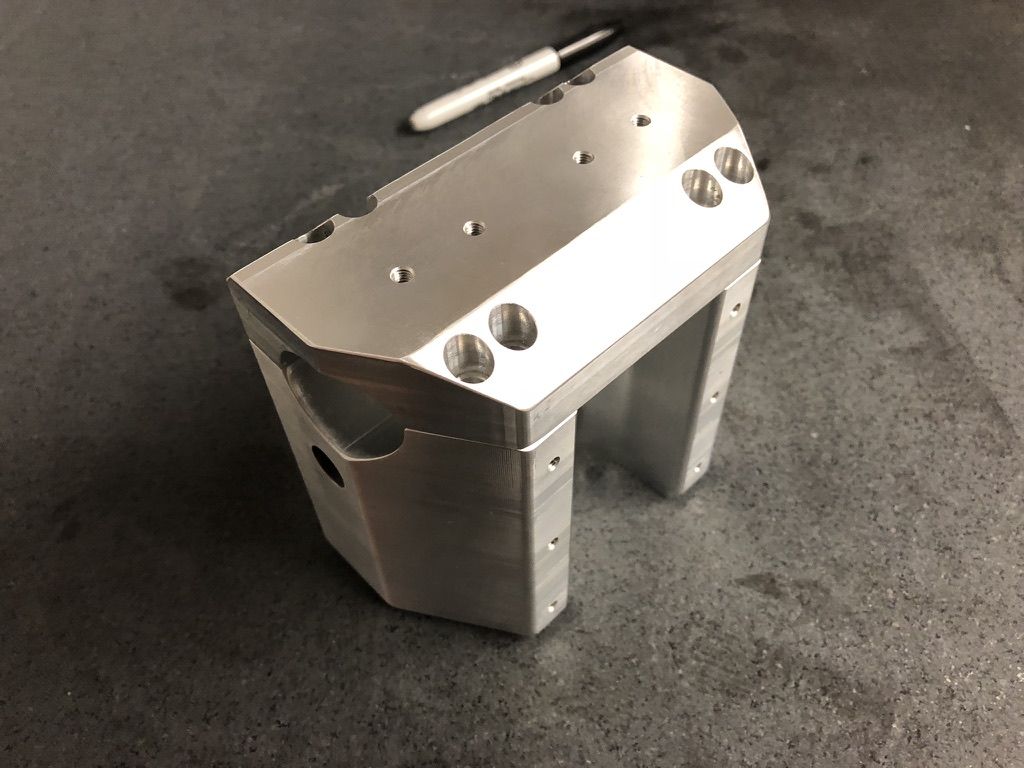
These parts often combine large or long geometry with tight tolerances on sealing and connection features, which is where disciplined turning and multi-axis machining matter. Send your part envelope and we'll confirm it fits our turning and milling capacity.
Corrosion-resistant alloys
Material selection in oil & gas is driven by corrosion, pressure, and temperature. Corrosion-resistant alloys (CRAs) are common, and they tend to be tougher to machine than carbon steels:
| Nickel alloys (Inconel 625/718) | Excellent corrosion and high-temperature resistance for severe service — Inconel machining. |
|---|---|
| Stainless & duplex steels | Corrosion resistance for valves, fittings, and bodies — stainless machining. |
| Super duplex / high-alloy stainless | Higher strength and chloride-corrosion resistance for severe sour and marine service. |
| Low-alloy & carbon steels | Used where corrosion exposure is controlled. |
Choosing the right alloy is a balance of corrosion resistance, strength, and cost — our material selection guide walks through the trade-offs.
NACE and sour-service context
Components exposed to hydrogen sulfide ('sour' service) are subject to NACE MR0175 / ISO 15156, the standard governing materials for use in H₂S-containing environments to resist sulfide stress cracking. Buyers may specify NACE-compliant materials, hardness limits, and heat-treat conditions for sour-service parts.
- NACE MR0175 / ISO 15156 sets material and hardness requirements for sour service.
- Material certifications and traceability tie each part back to qualifying stock.
- Hardness and heat-treat requirements must be respected through machining and any outside processing.
- NACE MR0175 / ISO 15156 is a customer-specified industry standard — tell us your sour-service requirements and we'll confirm we can meet them.
Quality, tolerances, and documentation
Pressure-containing and connection features carry tight tolerances because a leak path or a mis-threaded connection is a safety issue. As an ISO 9001:2015 shop, Rigid Concepts brings documented process control, dimensional inspection, and material traceability to energy work. See our tolerance guide for what's achievable on critical features.
Ready to price a component? Send your drawing and model through our contact page, and specify any NACE/MR0175, hardness, or documentation requirements so we can confirm we can meet them. Learn more about our oil & gas machining capability.